
•
Not enough water in the West Bank? Think again!
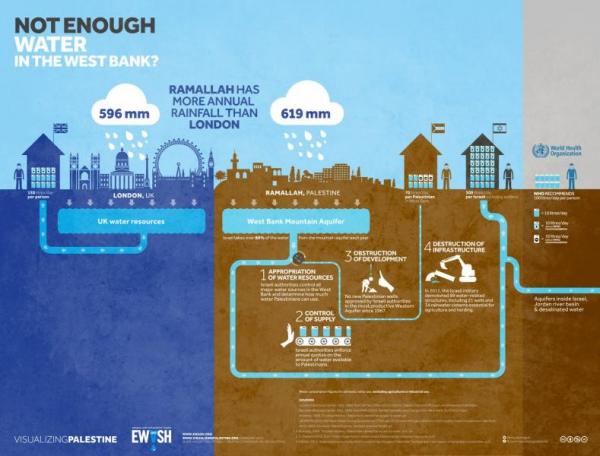
Click on the image to see the full-sized pdf version
The CPGB-ML is a young and growing party in Britain. It puts forward a consistently Marxist-Leninist, anti-imperialist, anti-social democratic political line.

Click on the image to see the full-sized pdf version

Poverty is often blamed on 'overpopulation', yet much of Africa, where some of the world's poorest people live, is very sparsely populated.
Marx dismissed Malthusianism as a lampoon on the human race,[1] but while Thomas Malthus’s cockeyed musings on surplus value and rent have disappeared from memory and no longer need to be knocked down, Malthus’s ‘Law of Population’[2] has taken a fresh hold on the western mind and needs to be fought again, like some new, more ferocious outbreak of mental ebola.
In Malthus’s 1798 best-selling (and, depressingly, never out of print) essay on population, ‘The Dismal Parson’ (as he was nicknamed by his opponents) asserted that the food supply always increases arithmetically, while, if ‘unchecked’ by war, famine or disease, population always increases geometrically.
From that idiotic assertion, made at the tail end of the great 18th-century agricultural revolution and just before the enormous development in agricultural machinery, which would open up the previously uncultivated prairies of the USA, Malthus concluded that working-class poverty was, is and ever will be inevitable unless the working classes stopped flooding the ‘labour market’ with their own progeny. Malthus suggested working-class celibacy or very late marriage as the cure for this ‘problem’.
Seven decades on, and enter the neo-Malthusians. Whether liberals, like John Stuart Mill and Lord Amberley, or radicals, like Richard Carlisle, Charles Bradlaugh and Bradlaugh’s sidekick the execrable Mrs Annie Besant, these followers of Malthus all agreed that working-class poverty in the midst of capitalist plenty was entirely due to the constant arrival of little baby proletarians. Instead of recommending celibacy and late marriage, however, the neo-Malthusians suggested contraception – an idea that horrified mainstream Malthusians, who thought it would weaken the moral fibre of the nation.
It is interesting to note that contraception and abortion rights are now so completely seen as women’s rights issues that their Malthusian parentage is forgotten, while ‘overpopulation’ has been reinvented by changing the rhetoric away from Malthus’s original ‘flooding the labour market’ (which sounds very BNP) to ‘using up the earth’s non-renewable resources’, which sounds all green and has become the new accepted wisdom.
Green-thinking and Malthus-thinking are one and the same. Both preach that the problem is the existence of people, not capitalism, and both are equally opposed to the socialist revolution. This is not to say that some resources we use today won’t run out, or that some are not better than others, or that it’s not a bad thing to stop pollution and plastic bags are good.
It is saying that all the problems that humans encounter can be solved by humans working together – not for individual profit, but for the collective good. As for the planet being overpopulated, most of it is empty, and the vast tracts that are currently given over to such things as tobacco farming or cash-crop flowers for Valentine’s Day could be used for growing food.
Having said that the planet is not overpopulated does not mean of course that we should all give up on birth control and have a baby every year. In agricultural societies with high infant mortality, babies coming very year was a necessity (and in the world as it is, it is still a necessity in agricultural societies). But generally, in a socialist world, we might possibly aim for a smallish population rise so that we always have more people under, say, 50 than over. Younger people are extremely important for society: they have energy, strength, new ideas and enthusiasm. Older people, on the other hand, tend to have accumulated lots of experience, which means they know stuff and are wiser.
So where does this take us? Straight to the capitalist world we live in, which has absorbed so much Malthusianism in green clothing that it blames poor people’s poverty and the capitalist system’s abuse of resources on the existence of children. So much so that today many relatively prosperous people in the richer countries have come to see the very continuation of life as being somehow ‘anti-social’.
This isn’t a new phenomenon, however. In 1913 Lenin attacked the resurgence of the pessimistic ideology of neo-Malthusianism, which portrayed having children as a negative because the conditions they were being born into in pre-revolutionary Russia were so harsh.
His article is excellent, so we have reproduced it below for the benefit of our readers.
******************************
The working class and neo-Malthusianism
by V I Lenin, 16 June 1913
At the Pirogov[3] Doctors’ Congress[4] much interest was aroused and a long debate was held on the question of abortions. The report was made by Lichkus,[5] who quoted figures on the exceedingly widespread practice of destroying the foetus in present-day so-called civilised states.
In New York, 80,000 abortions were performed in one year and there are 36,000 every month in France. In St Petersburg the percentage of abortions has more than doubled in five years.
The Pirogov Doctors’ Congress adopted a resolution saying that there should never be any criminal prosecution of a mother for performing an artificial abortion and that doctors should only be prosecuted if the operation is performed for ‘purposes of gain’.
In the discussion the majority agreed that abortions should not be punishable, and the question of the so-called neo-Malthusianism (the use of contraceptives) was naturally touched upon, as was also the social side of the matter. Mr Vigdorchik,[6] for instance, said, according to the report in Russkoye Slovo, that ‘contraceptive measures should be welcomed’ and Mr Astrakhan exclaimed, amidst thunderous applause:
“We have to convince mothers to bear children so that they can be maimed in educational establishments, so that lots can be drawn for them,[7] so that they can be driven to suicide!’[8]
If the report is true that this exclamation of Mr Astrakhan’s was greeted with thunderous applause, it is a fact that does not surprise me. The audience was made up of bourgeois, middle and petty bourgeois, who have the psychology of the philistine. What can you expect from them but the most banal liberalism?
From the point of view of the working class, however, it would hardly be possible to find a more apposite expression of the completely reactionary nature and the ugliness of ‘social neo-Malthusianism’ than Mr Astrakhan’s phrase cited above.
… “Bear children so that they can be maimed” … For that alone? Why not that they should fight better, more unitedly, consciously and resolutely than we are fighting against the present-day conditions of life that are maiming and ruining our generation?
This is the radical difference that distinguishes the psychology of the peasant, handicraftsman, intellectual, the petty bourgeois in general, from that of the proletarian. The petty bourgeois sees and feels that he is heading for ruin, that life is becoming more difficult, that the struggle for existence is ever more ruthless, and that his position and that of his family are becoming more and more hopeless. It is an indisputable fact, and the petty bourgeois protests against it.
But how does he protest?
He protests as the representative of a class that is hopelessly perishing, that despairs of its future, that is depressed and cowardly. There is nothing to be done … if only there were fewer children to suffer our torments and hard toil, our poverty and our humiliation – such is the cry of the petty bourgeois.
The class-conscious worker is far from holding this point of view. He will not allow his consciousness to be dulled by such cries no matter how sincere and heartfelt they may be. Yes, we workers and the mass of small proprietors lead a life that is filled with unbearable oppression and suffering. Things are harder for our generation than they were for our fathers. But in one respect we are luckier than our fathers. We have begun to learn and are rapidly learning to fight – and to fight not as individuals, as the best of our fathers fought, not for the slogans of bourgeois speechifiers that are alien to us in spirit, but for our slogans, the slogans of our class. We are fighting better than our fathers did. Our children will fight better than we do, and they will be victorious.
The working class is not perishing; it is growing, becoming stronger, gaining courage, consolidating itself, educating itself and becoming steeled in battle. We are pessimists as far as serfdom, capitalism and petty production are concerned, but we are ardent optimists in what concerns the working-class movement and its aims. We are already laying the foundation of a new edifice and our children will complete its construction.
That is the reason – the only reason – why we are unconditionally the enemies of neo-Malthusianism, suited only to unfeeling and egotistic petty-bourgeois couples, who whisper in scared voices: “God grant we manage somehow by ourselves. So much the better if we have no children.”
It goes without saying that this does not by any means prevent us from demanding the unconditional annulment of all laws against abortions or against the distribution of medical literature on contraceptive measures, etc. Such laws are nothing but the hypocrisy of the ruling classes. These laws do not heal the ulcers of capitalism; they merely turn them into malignant ulcers that are especially painful for the oppressed masses. Freedom for medical propaganda and the protection of the elementary democratic rights of citizens, men and women, are one thing. The social theory of neo-Malthusianism is quite another. Class-conscious workers will always conduct the most ruthless struggle against attempts to impose that reactionary and cowardly theory on the most progressive and strongest class in modern society, the class that is the best prepared for great changes.[9]
******************************
The italics in the final paragraph are not Lenin’s, but it is well to emphasise that Lenin was not opposed to reproductive rights, he was opposed to the neo-Malthusian negativity, which under capitalism makes potential parents see children as only more unaffordable mouths to feed, while a socialist sees them as hands to work, brains to think and strength to fight.
==========
NOTES
[1] Letter from K Marx to J B Schweizer, 24 January 1865, K Marx and F Engels, Selected Works, Volume 2.
[2] T R Malthus, An Essay on the Principle of Population, 1798.
[3] Nicholay Piragov (1810-1881) was a field surgeon in the Crimea. Said to be the first to use anaesthetics on the battlefield, he recruited army nurses, set up field hospitals and was a generally progressive bourgeois-liberal doctor.
[4] The Piragov Doctors Congress was a prestigious meeting of liberal Russian doctors working in public health and sanitation held about every two years from 1885. Lenin is referring to the twelfth congress, held in 1913, where there was a well-publicised debate on abortion. By a small majority the congress voted for decriminalisation.
[5] Dr Lizar Lichkus, obstetrician St Petersburg maternity hospital.
[6] Dr Natan Vigdorchik, ‘public health’ physician in St Petersburg.
[7] In tsarist Russia, lots were drawn for compulsory military service. Conditions were terrible and these were dreaded.
[8] There were many reported cases of conscripts committing suicide.
[9] ‘The working class and neo-Malthusianism’ by V I Lenin, Pravda, No 137, 16 June 1913.
From the International Report delivered to the CPGB-ML’s central committee on 3 December
China has announced that it will be spending £1.1tr over the next five years on developing green energy and clean technology hi-tech manufacturing.
In the meantime, the China Investment Corporation, China’s sovereign wealth fund, has announced plans for investment in UK infrastructure in the belief that this will bring “stable and sound financial returns”.
Osborne’s strategy for rescuing the economy now seems to revolve round spending some £30bn on infrastructure projects, for which purpose he is hijacking £20bn of pension funds, which will no doubt bear the brunt of any losses.
Projects to be included in Britain’s national infrastructure plan include upgrades to the M1 and M25 and new railway lines, including reopening an Oxford-Cambridge line that fell victim to the Beeching cuts.
From the International Report delivered to the CPGB-ML’s central committee on 5 November
On the outskirts of Beijiang, southeast of Beijing, a Chinese publicly-owned corporation SDIC has built what the New York Times refers to as a “technical marvel: an ultrahigh-temperature, coal-fired generator with state-of-the-art pollutions controls, mated to advanced Israeli equipment that uses its leftover heat to distill seawater into fresh water”.
The fresh water so generated costs twice as much to produce as what it sells for. However, per capita fresh water supplies are dwindling at an alarming rate. With most enterprises wealthy enough to set up such a project being capitalist enterprises tied to profitability, not many desalination plants, although desperately needed, are being produced. It is fortunate that China is still able to make an important contribution to the future of humanity.
China’s goal is to quadruple its production of desalinated water by 2020 from the current 180m gallons to about 800m, which will require 10-12 more plants like the one that has just been completed. Currently, less than 60 percent of China’s desalination equipment is domestic, with the rest being imported mainly from Israel, but China plans to increase its production of such equipment to provide 90 percent of its needs by 2020.
Meanwhile, on 1 November, China launched an unmanned spacecraft into orbit whose function will be to practise docking techniques to join with the Tiangong-1 or ‘Heavenly Palace’ experimental module launched on 29 September. Space exploration is another project that economic crisis tends to wipe off the agenda of capitalist countries.

Work on trench digging for a waterpipe in Libya's Great Man-made River project, 1988
By Frances Thomas, via Uruknet
September 1st is the anniversary of an event little known in the West. Today, 20 years on, the people who deserve to be celebrating it are instead enduring a war. Yet the achievement changed their lives greatly and merits recognition.
A tap was turned on in Libya. From an enormous ancient aquifer, deep below the Sahara Desert, fresh water began to flow north through 1,200km of pipeline to the coastal areas where 90 percent of Libyan people live, delivering around 1m cubic metres of pure water per day to the cities of Benghazi and Sirte.
Crowds gathered in the desert for the inaugural ceremony. Phase I of the largest civil engineering venture in the world, the Great Man-made River Project, had been completed.
It was during the 1953 search for new oilfields in southern Libya that the ancient water aquifers were first discovered: four huge basins with estimated capacities each ranging between 4,800 and 20,000 cubic kms. Yes, that’s cubic kilometres. There is so much water that Libya had recently also offered it to Egypt for their needs.
After the bloodless revolution of 1969, also on 1 September, the new government nationalised the oil companies and spent much of the oil revenues on harnessing the supply of fresh water from the desert aquifers by putting in hundreds of bore wells.
Muammar Gaddafi’s dream was to provide fresh water for everyone, and to turn the desert green, making Libya self-sufficient in food production. He established large farms and encouraged the people to move to the desert. But many preferred life on the coast and wouldn’t go.
So Gaddafi next conceived a plan to bring the water to the people. Feasibility studies were carried out by the Libyan government in the 1970s, and in 1983 the Great Manmade River Authority was set up. The project began the following year, fully funded by the Libyan government.
The almost $30bn cost to date has been without the need of any international loans. Nor has there been any charge on the people, who do not pay for their reticulated water, which is regarded in Libya to be a human right and therefore free.
GMMRP figures are staggering. The ‘rivers’ are a 4,000km network of 4m diameter lined concrete pipes, buried below the desert sands to prevent evaporation. There are 1,300 wells, 500,000 sections of pipe, 3,700km of haul roads, and 250m cubic metres of excavation. All material for the project was locally manufactured.
Large reservoirs provide storage, and pumping stations control the flow into the cities. The pipeline first reached Tripoli in 1996, and when Phase V is completed, the water will allow about 155,000 hectares of land to be cultivated.
To achieve all this, construction work was tendered and many overseas companies, including from the US, Korea, Turkey, Britain, Japan and Germany, took up contracts for each phase, and some have worked for decades in Libya.
The project has not been without problems, including faulty materials and financial difficulties within some of the contracting firms. Since the Nato air attacks on Libya began in March, most foreign nationals have returned home, including those employed on the hydro scheme. The final phase of the Great Man-made River Project is stalled.
Libyan people put their hearts into work on the GMMR from the beginning, and years ago took on most of the managerial and technical positions as their expert knowledge increased, with government policy encouraging their education, training and employment. They proudly call the GMMRP the “eighth wonder of the world”.
(UN Human Development Index figures for Libya since the beginning of Gaddafi’s leadership can be found here http://bit.ly/b4ItsI)
The project was so well recognised internationally that UNESCO in 1999 accepted Libya’s offer to fund an award named after it, the Great Man-Made River International Water Prize, the purpose of which is to “reward remarkable scientific research work on water usage in arid areas“. http://bit.ly/rnxiCf
Gaddafi was often ridiculed in the West for persevering with such an ambitious project. Pejorative terms such ‘pipe dream’, ‘pet project’ and ‘mad dog’ appeared in UK and US media. Despite a certain amount of awe for the enormity of the construction, the Great Man-made River was often dismissed as a ‘vanity project’ and then rarely mentioned in western media.
But the truth is that it’s a world-class water delivery system, and often visited by overseas engineers and planners wanting to learn from Libyan expertise in water transfer hydro-engineering.
On 22 July this year, four months into the air strikes to “protect civilians”, Nato forces hit the GMMR water supply pipeline. For good measure the following day, Nato destroyed the factory near Brega that produces the pipes to repair it, killing six guards there.
Nato air strikes on the electricity supply, as well as depriving civilians of electricity, mean that water pumping stations are no longer operating in areas even where the pipelines remain intact. Water supply for the 70 percent of the population who depend on the piped supply has been compromised with this damage to Libya’s vital infrastructure.
Oh, and by the way, attacking essential civilian infrastructure is a war crime.
Today in Sirte, which along with Benghazi was one of the first two cities to receive the water, there should be a celebration to mark the 20 years since fresh reticulated water first came to their city, and Gaddafi’s vision should be honoured.
But today Sirte is encircled by the rebels, and right now is being carpet bombed by Nato. The civilians are terrorised, and many families have tried to flee, but the rebels block all the exits. They kill the men, and send the women and children back into the city to be bombed. In the media the rebels are reported to have given Sirte until Saturday to surrender before they commence a full attack. But that’s not what’s happening really.
1 September 2011 will be remembered in history for Nato’s complicity in the massacre of the people of Sirte.
Back in 1991, at the gala opening of GMMRP Phase I, and maybe recalling the 1986 bombing of his home (which was carried out by US military on Reagan’s orders), Muammar Gaddafi spoke these words to the invited international dignitaries and assembled crowd:
“After this achievement, American threats against Libya will double … The United States will make excuses, (but) the real reason is to stop this achievement, to keep the people of Libya oppressed.”
His words were prophetic.